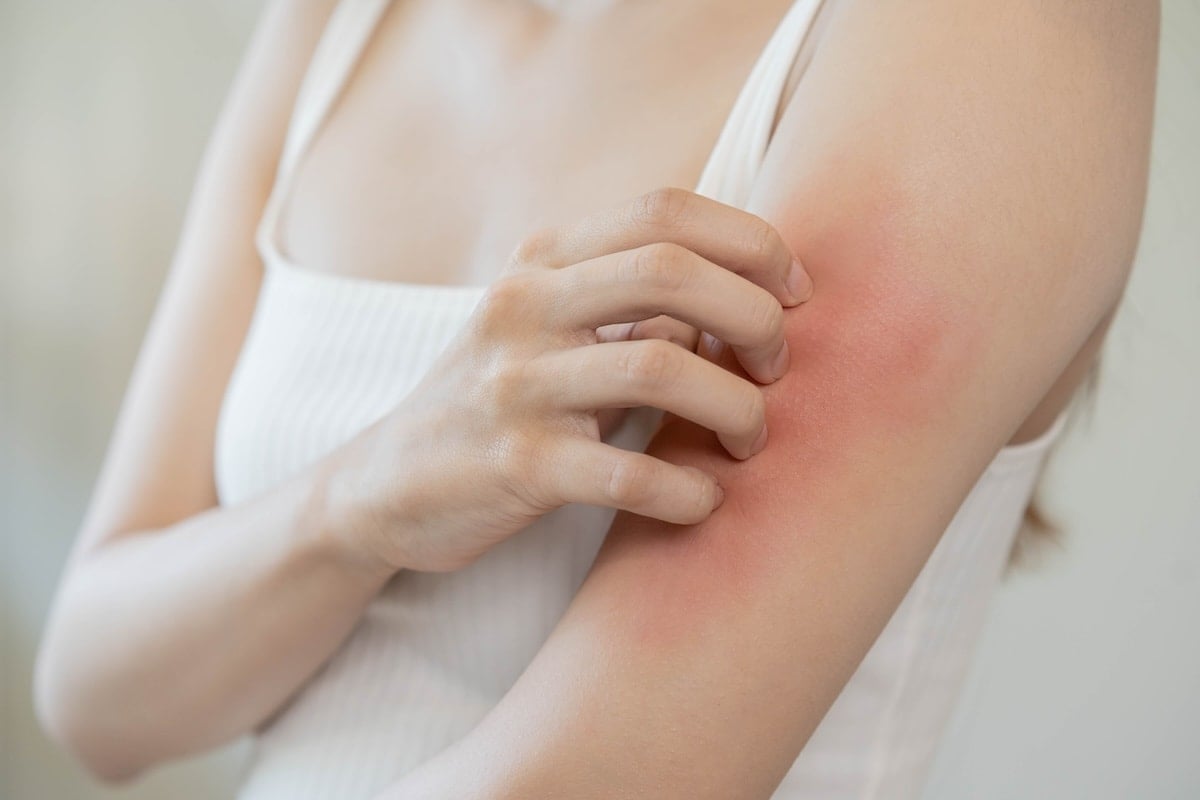
Eczema and psoriasis are two of the most common chronic skin conditions, and they are easy to confuse because both can cause red, scaly patches on the skin and scalp. They have different causes and are treated differently, so an accurate diagnosis matters. The board-certified dermatologists at North Dallas Dermatology Associates diagnose and treat eczema and psoriasis in adults and children as part of our medical dermatology practice, serving North Dallas, Preston Hollow, Highland Park, University Park, Lake Highlands, White Rock and Richardson.
What Is Eczema?
Eczema is a group of conditions that make the skin dry, itchy and inflamed. The most common type, atopic dermatitis, often starts in childhood and is linked to a weakened skin barrier and an overactive immune response. Many people with eczema also have, or have family members with, hay fever, asthma or food allergies.
Eczema can appear anywhere, but it commonly affects the creases of the elbows and knees, the hands, the neck and the face. In babies it often shows up on the cheeks and scalp. Other forms include contact dermatitis (a reaction to something that touches the skin), dyshidrotic eczema (small itchy blisters on the hands and feet) and seborrheic dermatitis (flaky, greasy patches, often on the scalp and face).
What Is Psoriasis?
Psoriasis is an immune-mediated condition that speeds up the growth of skin cells, causing thick, raised patches (plaques) covered with silvery-white scale. Plaques are most common on the elbows, knees, scalp and lower back, but psoriasis can also affect the nails, the palms and soles, and skin folds. Psoriasis is not contagious.
Some people with psoriasis develop psoriatic arthritis, which causes joint pain, stiffness or swelling. If you have psoriasis and notice joint symptoms, tell your dermatologist, because early treatment can help protect your joints.
Eczema vs. Psoriasis: Key Differences
- Itch: eczema is usually very itchy. Psoriasis can itch too, but the itch is often milder.
- Appearance: eczema tends to look dry, rough or weepy with less defined edges. Psoriasis plaques are usually thicker, with sharp borders and silvery scale.
- Location: eczema favors skin creases, such as the inner elbows and behind the knees. Psoriasis favors the outer elbows, knees, scalp and lower back.
- Related conditions: eczema is linked with allergies and asthma. Psoriasis is linked with psoriatic arthritis and some other health conditions.
Because the two can look alike, and some people have features of both, it is best to have a dermatologist make the diagnosis. Occasionally a skin biopsy is needed to confirm it.
Common Triggers
Both conditions tend to flare and calm down over time. Common triggers include dry air, hot showers, fragranced soaps and detergents, sweat, stress and illness. Psoriasis can also be triggered by skin injury, certain infections such as strep throat, smoking, alcohol and some medications. Learning your own triggers is an important part of keeping your skin under control.
How We Treat Eczema
Treatment focuses on repairing the skin barrier, calming inflammation and controlling itch. Your plan may include:
- Daily skin care: short, lukewarm baths or showers, fragrance-free cleansers and laundry products, and a thick moisturizer applied right after bathing.
- Prescription creams and ointments: topical corticosteroids for flares, and non-steroid prescription options that can be used on sensitive areas such as the face and eyelids.
- Treatment for moderate to severe eczema: when creams are not enough, options can include light therapy, biologic injections and newer oral medications. Your dermatologist will review the benefits, risks and any monitoring needed.
How We Treat Psoriasis
Psoriasis treatment depends on the type, how much skin is involved, where it is and whether your joints are affected. Options may include:
- Topical treatments: corticosteroids, vitamin D-based creams and other prescription topicals, plus medicated shampoos for scalp psoriasis.
- Light therapy (phototherapy): controlled exposure to ultraviolet light to slow skin cell growth.
- Oral medications: for more widespread psoriasis.
- Biologics: injectable medicines that target specific parts of the immune system. They are often used for moderate to severe psoriasis or psoriatic arthritis.
Many patients use a combination of treatments. Neither eczema nor psoriasis has a cure, but with the right plan most people can achieve long stretches of clearer, more comfortable skin.
Eczema and Psoriasis in Children
Eczema is very common in babies and young children, and many children improve as they get older. Our pediatric dermatology care, led by Nnenna Agim, MD, FAAD, helps families build a skin-care routine and treatment plan that works for their child.
Frequently Asked Questions
No. Neither eczema nor psoriasis can be spread from person to person. However, eczema-prone skin can become infected, so see your provider if patches become painful, crusted or ooze.
There is no cure for either condition yet, but both can usually be well controlled. Many patients have long periods with few or no symptoms on the right treatment plan.
Thick, fragrance-free creams or ointments usually work better than thin lotions. Apply moisturizer within a few minutes of bathing to lock in water. Your dermatologist can recommend specific products for your skin.
Used as directed by your provider, topical steroids are a safe and effective treatment for flares. Using strong steroids for long periods or on thin skin can cause side effects, which is why your dermatologist will choose the right strength and tell you how long to use it.
See a dermatologist if over-the-counter products are not helping, if itching affects your sleep, if patches are spreading or look infected, or if you have psoriasis and notice joint pain or swelling.
Ready for relief? Schedule an appointment or call (214) 420-7070 to see one of our dermatologists and physician assistants. Psoriasis is one of several immune-related skin conditions we treat; learn more about autoimmune skin diseases, and see our accepted insurance plans.